“No Biggie”: How Our Responses Shape Family Connection
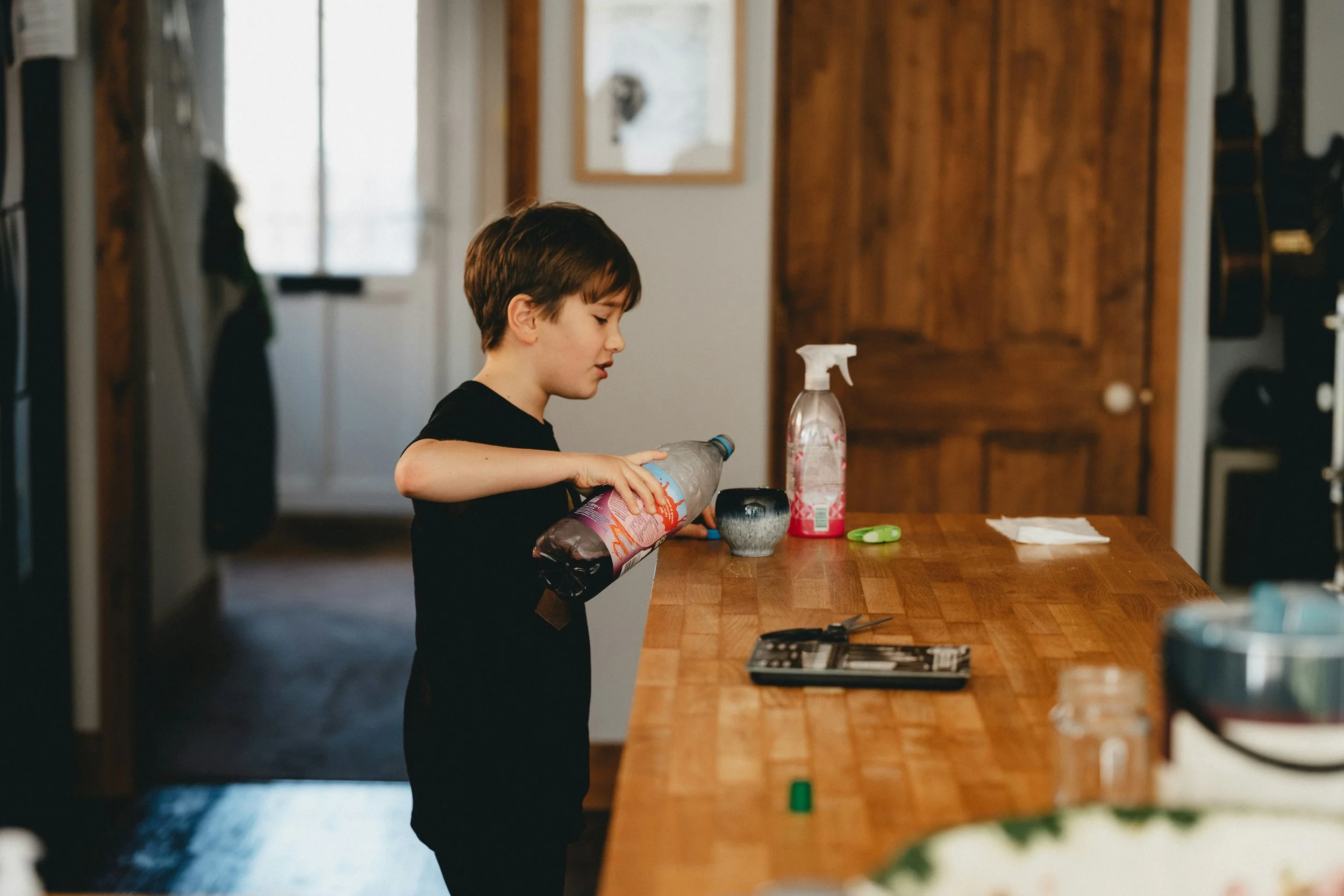
“Stop and I’ll pour it for you so it doesn’t spill!” How often we say this. What does it teach our child, and what does it say about us as parents? What would a conscious, positive parent do?
When a child misses the mark, whether it is something small like spilling juice or something bigger like breaking a plate or missing the soccer goal, our response teaches far more than the mistake itself ever could. In moments like these, positive parenting asks us to pause and remember one essential truth: our child wants to get it right.
Yes, young children sometimes test limits. Toddlers and preschoolers are famous for experiments like dumping blueberries on the floor just to see what happens next and if we’ll react or respond. Other times, it truly is an accident. Both are part of learning. How we respond in those moments quietly shapes family connection, confidence, and emotional safety.
Why Mistakes Are a Normal Part of Childhood
Children are still developing coordination, impulse control, and awareness of their surroundings. Toddlers are quite clumsy. Many kids move way too fast, overlook obstacles, and have limited fine motor skills. Even when we remind them not to run indoors, they do. Not because they are defiant, but because their brains are still under construction and their need in the moment is great.
Understanding age and stage in development matters in positive parenting. A toddler drawing on the sofa with markers is not trying to ruin furniture. They are swept up in impulsivity, curiosity and the moment. This does not mean there are no limits or consequences. It means we respond with perspective instead of anger and rage.
Response vs. Reaction: The Heart of Positive Parenting
Our reactions can either strengthen or strain family connection. When we shame, scold, or explode, children may shut down, have a tantrum, melt down, or develop a fear of failure. When mistakes feel unsafe, kids stop trying.
A calm response does something powerful. Saying, “No biggie. It’s only juice. Let’s clean it up together,” sends a clear message: mistakes are part of learning, and our relationship is secure. This models emotional regulation and teaches children how to recover from setbacks and move past mistakes.
Positive parenting is not permissive. It is intentional. We guide behavior with clear, age-appropriate limits, but without fear of punishment or shame.
Teaching Through Natural and Calm Consequences
Instead of yelling or threatening, we step into the role of being a steady parent leader. Markers drawn on the sofa? “Markers are for paper. I’m putting them away until tomorrow.” A spill on the floor? We grab towels and clean it together. Missed kicking the ball? “No biggie, you can try again.”
These moments build trust and reinforce family connection. Children learn that mistakes lead to learning, not punishment. They also learn self-regulation by watching us practice it first. This is our most valuable tool.
Why “No Biggie” Is a Game Changer
Repetition is how learning sticks. Reminding children to walk in the house, hold cups steady, or use materials correctly takes time. When we lead with calm, compassion, and clarity, we create an environment where growth and independence feels safe.
“No biggie” does not mean nothing matters. It means mistakes do not define your child or your parenting. Over time, this mindset fosters resilience, confidence, and a stronger parent-child bond.
And that is the heart of positive parenting: guiding behavior while protecting family connection, one spill, slip, and second chance at a time.
