Do You Know Why Your Child Is Not Listening?
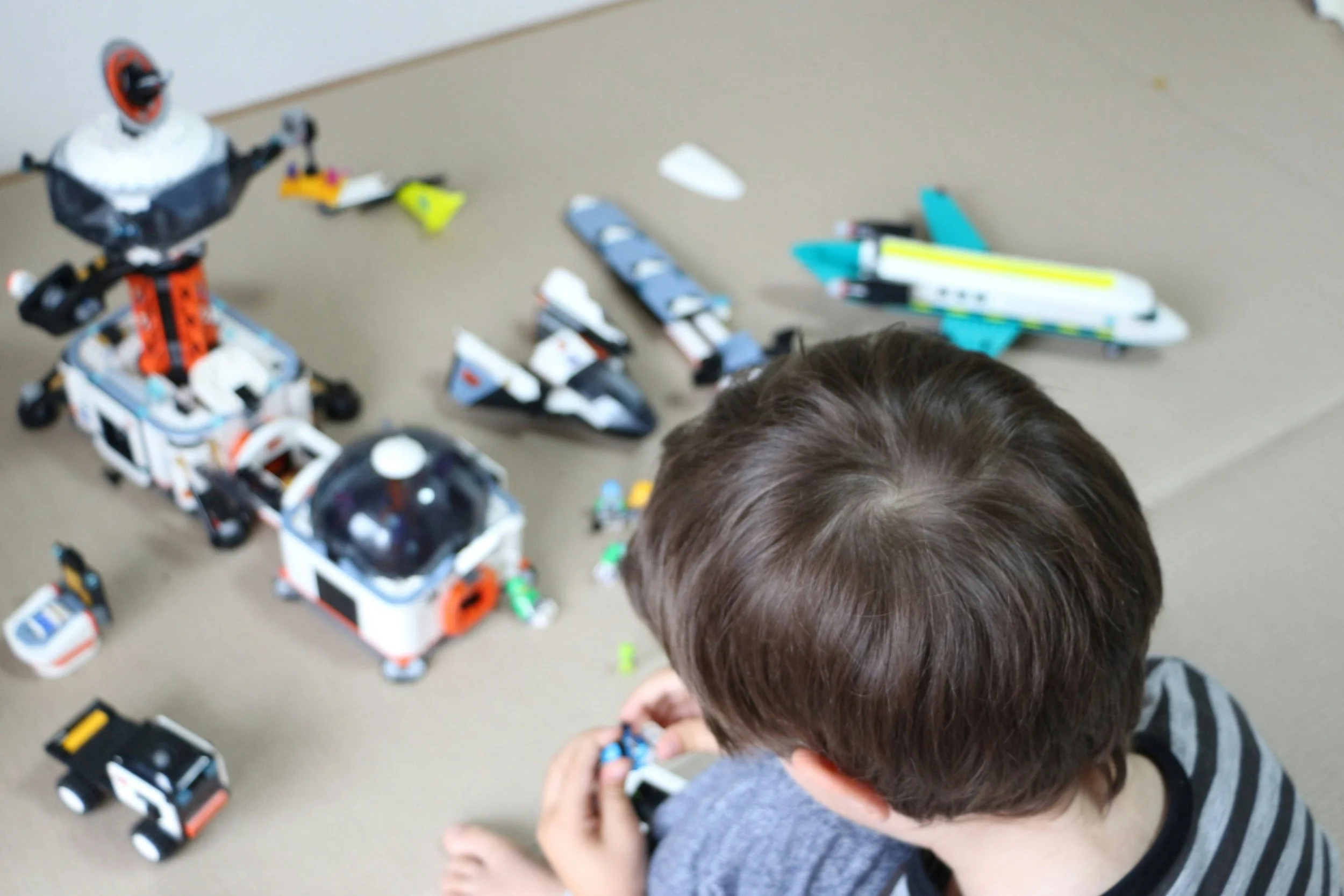
It feels like you’re being ignored. They’re doing what kids do- playing with toys, gaming, watching videos, building with Lego. You’ve called their name several times, gave 3-4 warnings yet they still haven’t shut the TV, or they won’t follow the instructions you gave. It feels disrespectful. It feels like you have no authority or control in your home. Your child hears you, but doesn’t listen. The yelling begins.
Stop, Shift and Start Something New
We think it’s easy to do. “Just shut the computer. I’m not asking you to do anything hard!”
Your child won’t follow directions. Your child has difficulty transitioning from this to that. Gentle parenting is just not working. Your child is simply not listening.
Here’s where it gets informative. It can be hard for kids to stop, shift, and transition to something else, something new, something less desired.
It’s not that they’re being difficult. The challenge is in shifting gears and moving from one thing to the next. Very often they don’t have the skill that we expect, think they have, or want them to have in being more flexible and able to pivot. It’s hard for children to redirect themselves easily, especially when they are absorbed in what they are doing.
Let’s bring in two of the 5 C’s that I teach in parent coaching: Compassion and Connection
Sometimes we expect our child to have a skill that we actually struggle with too. Let’s be honest. Getting off our devices is hard for us too. We have a hard time putting our phone away. We have a hard time not using our own devices at the meal table. We struggle with being present and modeling our ability to show self control. Here’s where we use Compassion- it’s hard for us too and we are adults It’s harder for them. Next we use Connection. Bend down to their eye level. Meet them with eye contact. “I know you love that show. When it’s over the Ipad gets closed. Who will close it, you or me?”
Drop into calm,conscious parenting.
Imagine this….
You’re fully engrossed in a call, and your child calls you to go to the playground or to drive them to the mall. You keep saying, “Just a few more minutes.” You probably want more time. Conscious parenting has look within at our own behavior and actions
When kids are fully engrossed in their play, their Lego building or video game, they may have difficulty stopping and coming to the dinner table and want more time too. An 8 year old watching Youtube videos may have difficulty stopping and starting homework. They struggle with transitions.
That doesn't mean you shouldn't expect cooperation. It means we can support teaching the skill while still holding the boundary. Connection is vital. It means we hold an expectation and follow through with that expectation, using conscious parenting, positivity and connection before correction.
It’s Not That They Won’t. Think Of It As Sometimes They Can’t
When your child is not listening, ask yourself, “Why is my child ignoring every instruction I give?” If they are non-responsive when you talk to them, pause, take a moment and get conscious. Take a deep breath, and ask yourself, “What’s getting in the way of him putting his shoes on? Why won’t she start her HW? How come my four year old isn’t getting dressed on their own?” What’s behind the not listening behavior?
Is it a behavior problem or is it a lack of skill? Is it me, or is it my child? Am I being vague and overtalking, or am I clear? These are questions to look within and ask ourselves
Sometimes it’s all the above. More often than not, they have not developed the skills needed to start, stop and shift. Executive functioning skills, the mental processes controlled by the frontal lobe that enable children to plan, focus attention, remember instructions, and manage tasks or manage their emotions successfully; the mental capacity to switch focus between tasks, adjust to unexpected changes, and problem-solve, is still under construction.
They know what to do, yet have a hard time getting started and need our support, our teaching, our limit and boundary setting. You can be empathetic and firm and clear. “I know you want to watch another video. That’s it for today.” And we hold that boundary, that limit, without being afraid of their reaction. Falling into permissive parenting, that loosy goosy “I’m afraid of your big feelings andreqactions, and I am easily convinced to give in to you,” diminishes our parental authority.
What’s A Conscious Parent To Do?
Set an intention for the week. With the start of a new school year, practice leaving the house on time without a meltdown. Maybe it’s to stop gaming and start HW without a fight. What’s getting in the way of them listening and following your instructions? Look withiin and look beneath the behavior.
You don’t have to talk louder or repeat yourself over and over.
Connect → Prepare them for the transition or expectation→ Set the boundary → Give one clear direction → Follow through.
Children need a parent they can count on that remains calm, puts in a boundary, uses few words clearly, gives timed warnings and follows through, understanding that it can be hard for a child to stop, shift and pivot. I’m learning how to do this in MahJong, pivoting when a hand I had my mind on is no longer viable, and it’s tough to do. Learning happens, with consistency.
